 Bobby Corpus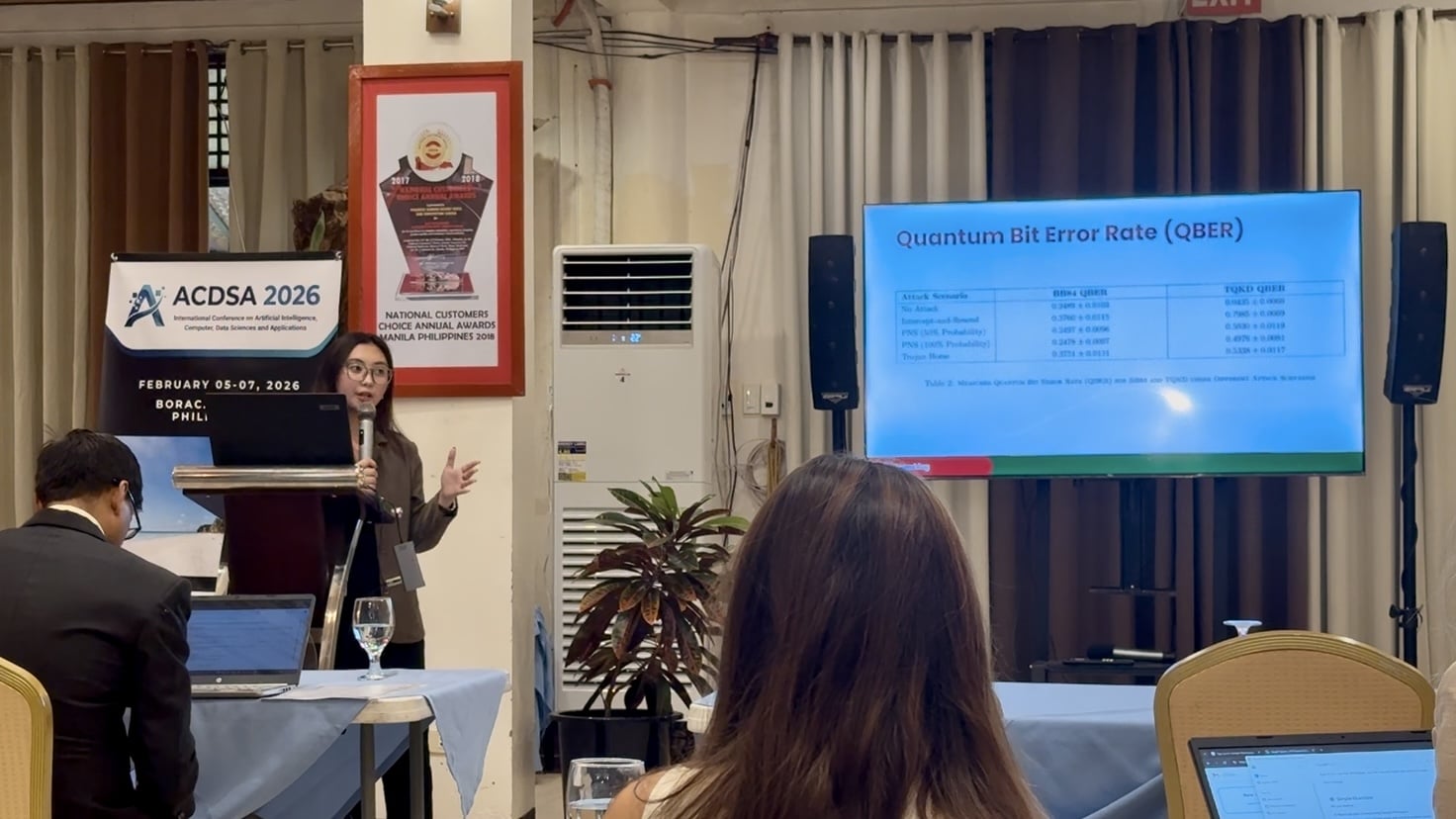
QCSP at ACDSA 2026: Two Papers Accepted and Presented in Boracay
We’re happy to share a milestone for the Quantum Computing Society of the Philippines (QCSP): our papers were accepted and presented at the International Conference on Artificial Intelligence, Computer, Data Sciences, and Applications (ACDSA 2026), held February 5–7, 2026 in Boracay, Philippines.
For QCSP, moments like this matter. Conferences like ACDSA bring together researchers working at the intersection of AI, data science, and emerging technologies—and it’s encouraging to see QCSP’s work recognized in that space, especially on a topic that is becoming increasingly urgent: security in a quantum-enabled future.
QCSP was represented at the conference by QCSP Fellow Dr Ian Agulo and QCSP Volunteer Kalie Jardinico, who presented the work on-site.
Paper 1: Eavesdropping Attacks in Teleportation-based QKD
Detection and Analysis of Eavesdropping Attacks in Teleportation-based Quantum Key Distribution Protocol
Authors: Mariah Kaliegee M. Jardinico, Bobby O. Corpus, and Ian Jasper A. Agulo
This paper focuses on the detection and analysis of eavesdropping attacks in teleportation-based Quantum Key Distribution (TQKD). As interest grows in quantum-secure communications, it becomes critical to go beyond “in principle” security and look at how protocols behave under realistic adversarial conditions.
By examining how TQKD responds to common intercept and eavesdropping techniques, the work contributes practical insight into how teleportation-based approaches can be evaluated, stress-tested, and strengthened—especially as quantum communication technologies move closer to real-world deployment.
 |
|---|
| Kalie Jardinico presenting QCSP’s accepted paper on eavesdropping detection in teleportation-based QKD at ACDSA 2026 (Boracay, Philippines). |
Paper 2: Hybrid PINN–CNN Model for Intrusion Detection in Quantum Networks
Physics-Informed and Convolutional Neural Network Hybrid Model for Intrusion Detection in Quantum Communication Networks
Authors: Ian Jasper A. Agulo, Crismar C. Calanoga, Jr., and Mariah Kaliegee M. Jardinico
This paper explores a hybrid approach to intrusion detection in quantum communication environments by combining:
- Physics-Informed Neural Networks (PINNs)
- Convolutional Neural Networks (CNNs)
The goal is to improve detection of cybersecurity threats—including Man-in-the-Middle and Side Channel attack patterns—within quantum communication networks.
What makes this direction exciting is the blend of methods: leveraging the pattern-recognition strength of CNNs while grounding the model with physics-informed constraints, helping move toward security tools that are not only data-driven, but also better aligned with the behavior of the underlying system.
 |
|---|
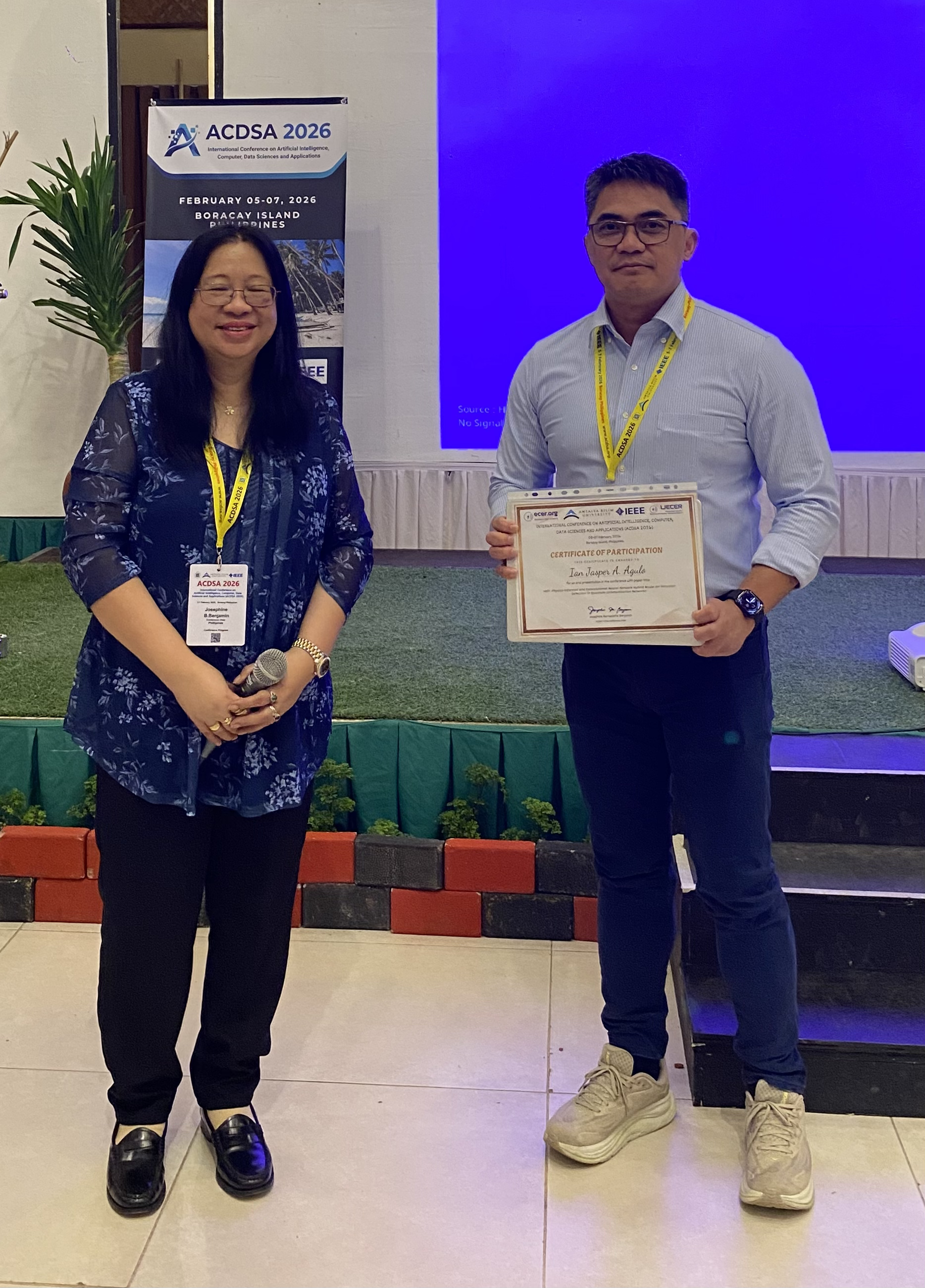
| Dr Ian Agulo receiving his Certificate of Participation at ACDSA 2026 (Boracay, Philippines), representing QCSP. |
Why it Matters
Quantum technologies are moving from research to real-world systems, including communications and security. But as adoption accelerates, security can’t be assumed and resilience can’t be an afterthought.
These papers help shift the conversation from “quantum is secure by nature” to security that is measurable, testable, and implementation-aware—from intrusion detection in quantum communication networks to eavesdropping analysis in QKD protocols.
For QCSP, this is part of building quantum-safe readiness in the Philippines: developing local expertise and practical research that can eventually inform deployments, standards, and policy decisions.
Congratulations to the team—and special thanks to Ian and Kalie for presenting and representing QCSP at ACDSA 2026.
 NVIDIA Launches First-ever Quantum Day at GTC 2025: Paving the Way for the Future of Quantum Computing