 QCSP
LAPU-LAPU CITY, Cebu, Philippines — The Quantum Computing Society of the Philippines (QCSP) held QISTCon.PH 2025, the country’s inaugural Quantum Information, Science and Technology Conference, from July 30 to August 1, 2025 in Lapu-Lapu City, Mactan, Cebu.
 |
|---|
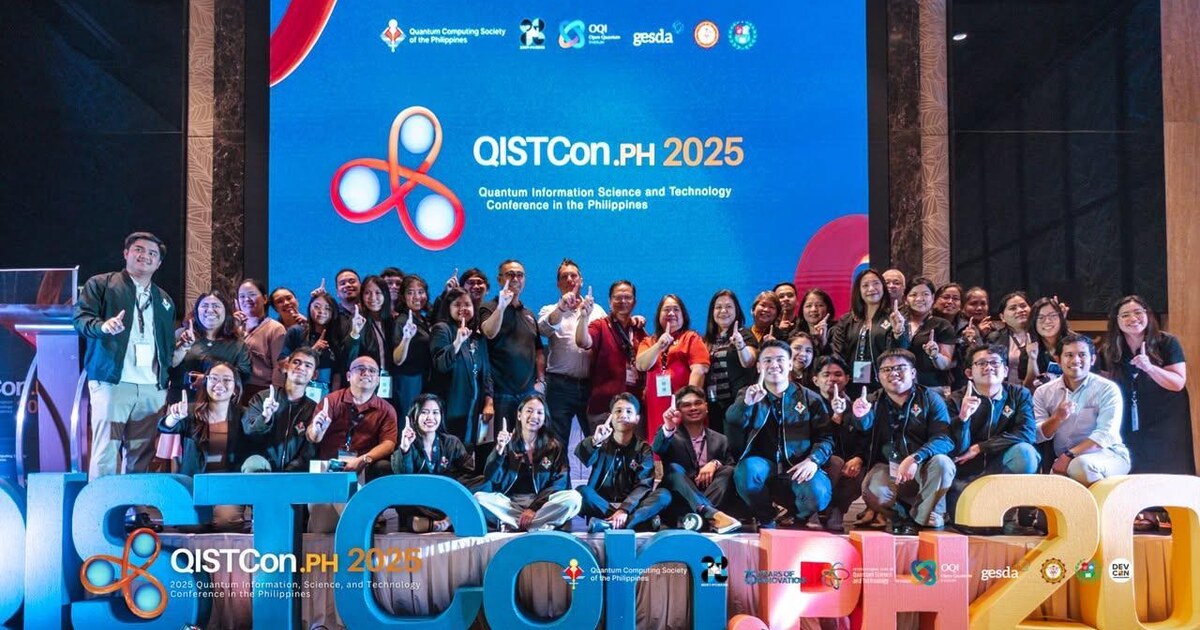
| Organizers, speakers, and participants at QISTCon.PH 2025 in Lapu-Lapu City, Cebu. |
The three-day conference brought together researchers, industry leaders, educators, and policymakers from the Philippines and abroad to exchange research, examine technology and policy developments, and build partnerships to strengthen the Philippine and Indo-Pacific quantum ecosystem. Its scope spanned quantum computing, communication, sensing, cybersecurity, education, investment, and responsible innovation, through presentations, panels, poster exhibits, working groups, demonstrations, and interactive activities.
QISTCon.PH 2025 was an official event of the International Year of Quantum Science and Technology and an IYQ Global-Funded Event. It was organized by QCSP and the DOST-Philippine Council for Industry, Energy and Emerging Technology Research and Development (DOST-PCIEERD), together with the Open Quantum Institute (OQI), the Geneva Science and Diplomacy Anticipator (GESDA), Cebu Institute of Technology–University, and the University of San Carlos. SEGQuRo and DevCon Cebu were collaborating organizations.
Day 1: Global Strategies and Industry Directions
 |
|---|
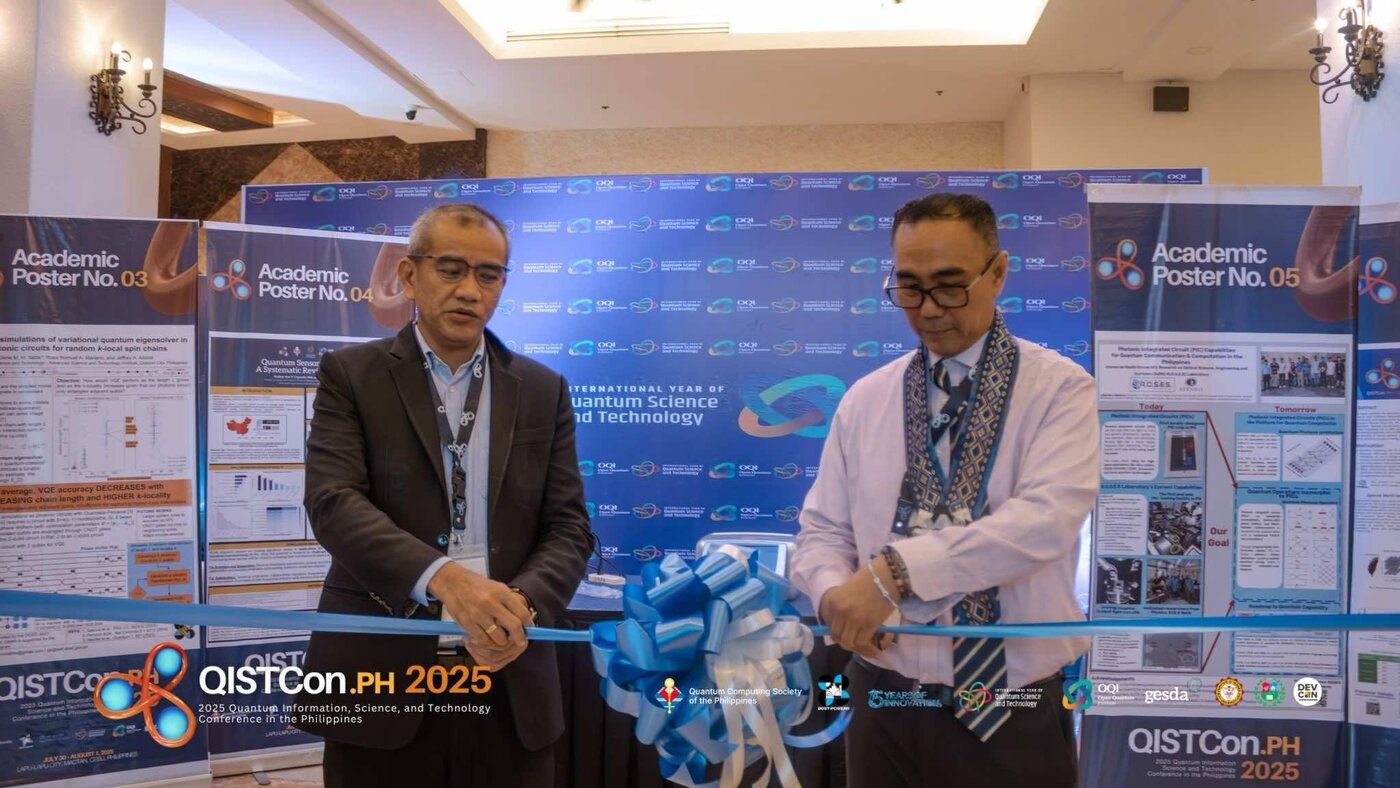
| The conference opened with a ribbon-cutting at the academic poster exhibit. |
The conference opened with messages from Philippine government leaders, followed by keynotes on global and national quantum strategies from speakers representing the OECD, Global Quantum Intelligence, and DOST-PCIEERD. Sessions on the Indo-Pacific quantum ecosystem featured perspectives from Singapore, Indonesia, and Thailand on national initiatives and regional collaboration.
 |
|---|
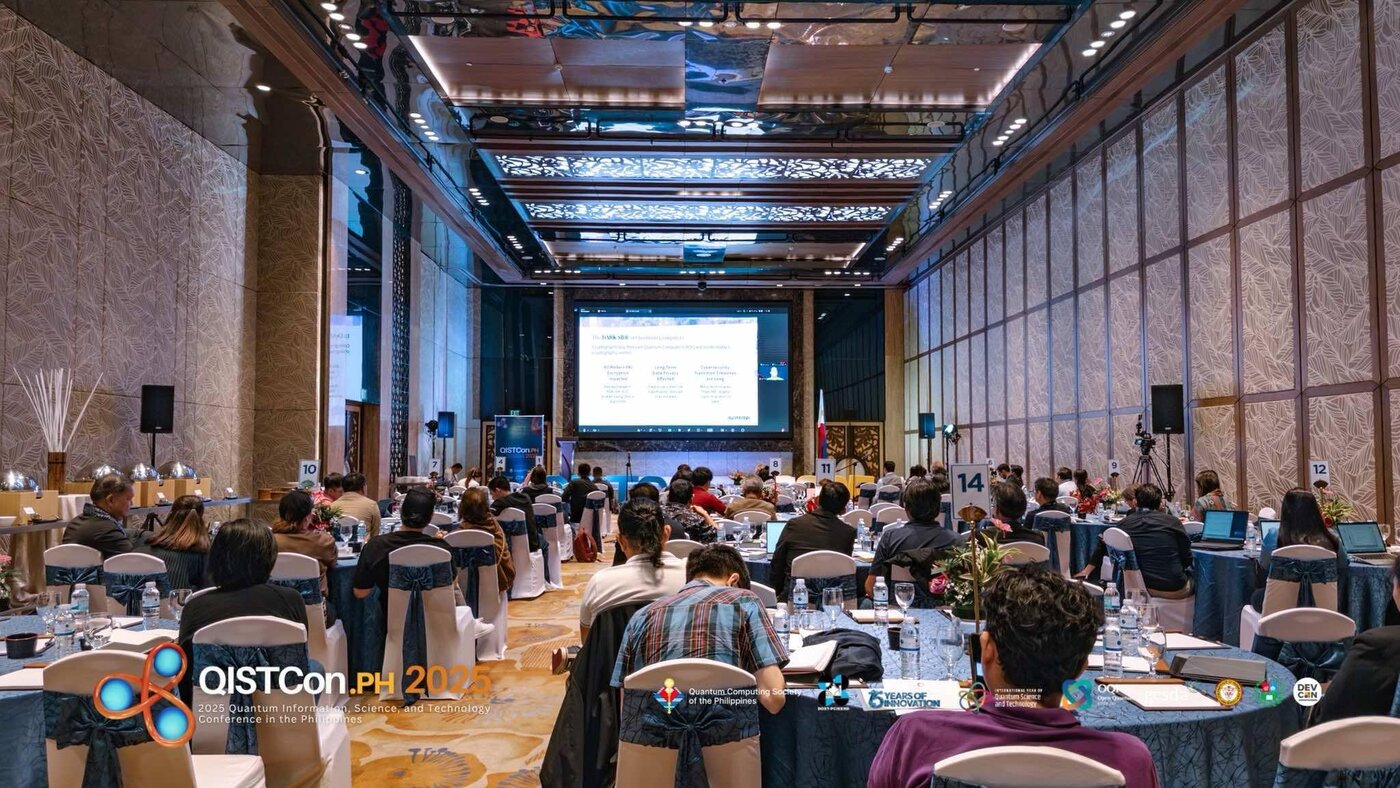
| Participants fill the plenary hall on the first day of the conference. |
Later sessions explored quantum hardware approaches, with contributions from SpinQ of China, Rigetti Computing of the United States, and Mountain Quantum of Canada. Qubits Ventures and QAI Ventures led discussions on investing in quantum technologies, while the cybersecurity sessions covered post-quantum cryptography, quantum key distribution, and quantum error correction, with business perspectives from EY Philippines, Deloitte Asia Pacific, and SpeQtral.
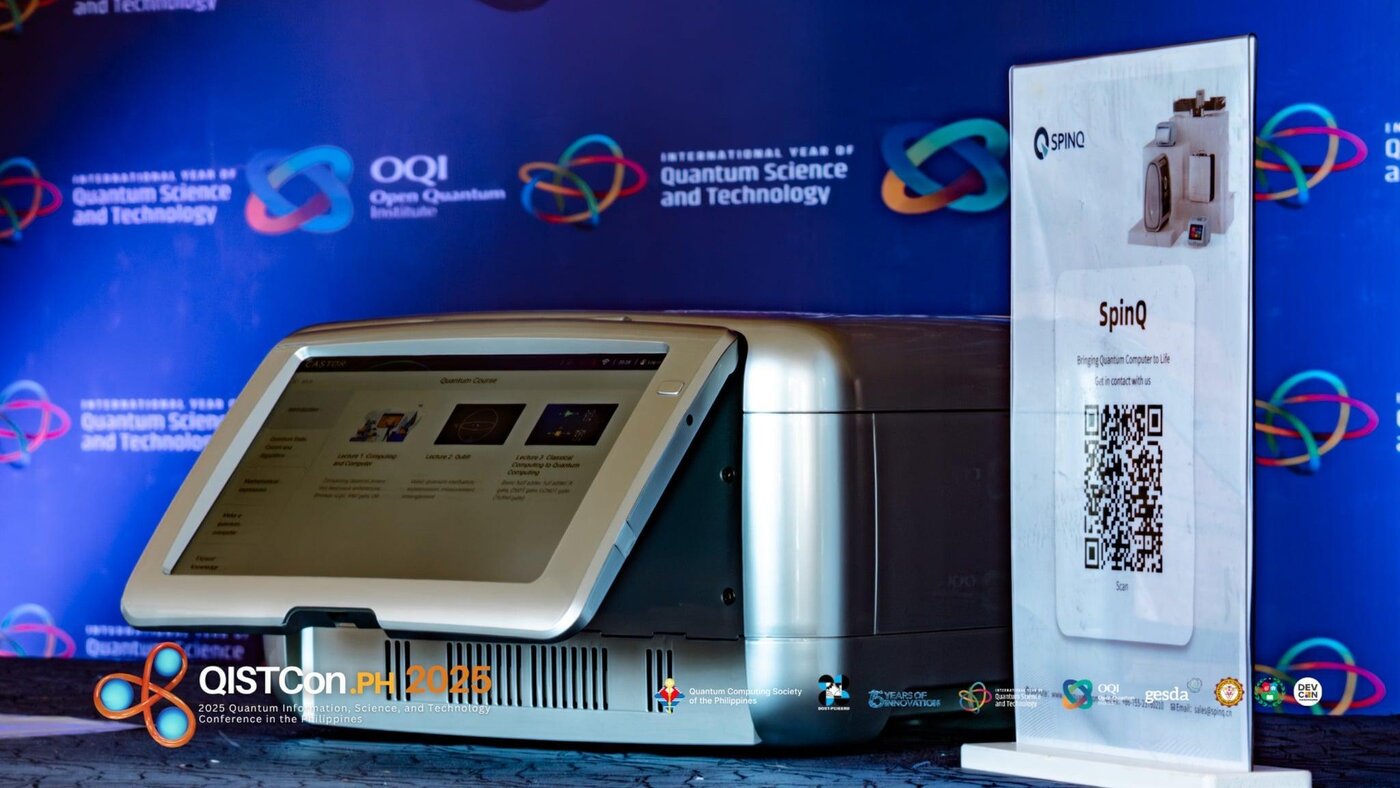
A highlight of the day was the unboxing and demonstration of a portable quantum computer brought to the Philippines by Post Quantum Technologies Inc. in partnership with SpinQ Technology, the nuclear magnetic resonance (NMR) Gemini Mini.
 |
|---|
| The SpinQ quantum computer on display at the conference. |
Industry and academic showcases, together with interactive activities such as QiskitBlocks, connected participants across sectors. The day ended with a poster exhibit and a social gathering.
Day 2: Enterprise, Ethics, and Quantum Diplomacy
The second day turned to enterprise applications, with speakers from HSBC, Amazon Web Services, IBM Quantum, and Microsoft Asia discussing how quantum computing is being integrated into finance and technology. Speakers from Vietnam, Singapore, Thailand, Malaysia, and the Philippines described grassroots quantum development across the Indo-Pacific, and sessions on ethical quantum and science anticipation and responsible quantum technologies for emerging markets examined ethical, legal, and societal considerations.
The Quantum Diplomacy Game
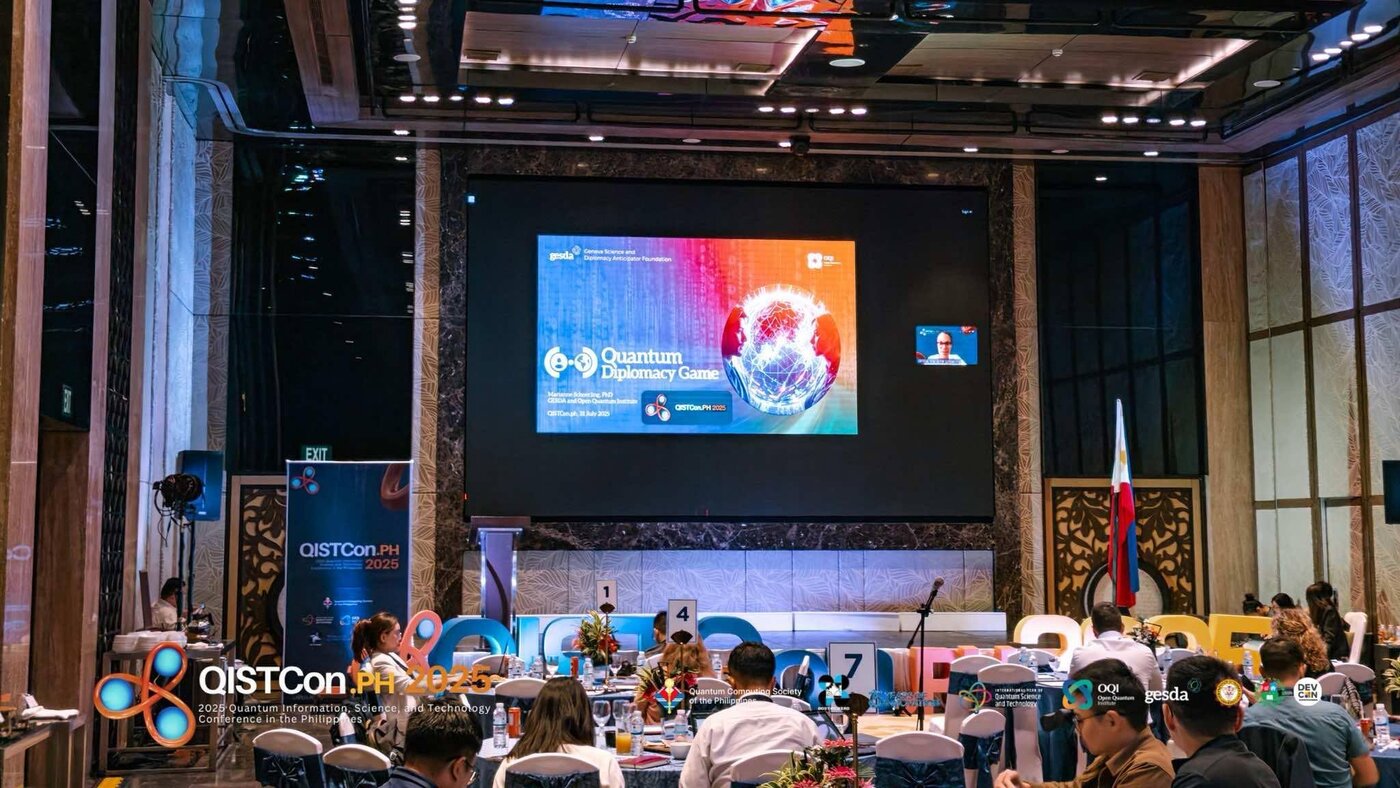
The day closed with the Quantum Diplomacy Game, organized by QCSP with support from DOST, the Open Quantum Institute, and the International Year of Quantum Science and Technology. In this immersive role-play, participants entered a fictional 2035 shaped by large-scale quantum computing, competing national ambitions, and cryptographic vulnerabilities. Teams acting as scientists, policymakers, and industry leaders debated decisions on innovation, ethics, security, and international cooperation.
 |
|---|
| The Quantum Diplomacy Game closed the second day of the conference. |
Schedule delays pushed the session back by two hours, to 4:00 PM, but about 100 participants, organized into three groups of roughly 30, took part with enthusiasm. After an initial period of hesitation, attendees embraced their roles and engaged in spirited debate. Many said it was their first interactive policy simulation, and participants from banking, telecommunications, and power expressed interest in versions tailored to their organizations. Proposed next steps include institutionalizing the game, extending it to Luzon and Mindanao, and establishing an annual schedule with sustainable funding and partnerships.
Day 3: Research, Education, and Working Groups
The final day focused on research and education. Dr. Mary Jacqueline Romero spoke on frontiers in quantum research, Dr. Mikhail Sayat on quantum memory, and Dr. Yen-Jui Chang on applications of quantum computing in finance. A dedicated session on the state of quantum research in the Philippines featured contributions from the University of the Philippines, Ateneo de Manila University, the Technological Institute of the Philippines Manila, Adamson University, and DOST, and a Southeast Asian research forum brought together representatives from Vietnam, Singapore, Thailand, and Malaysia. A science communication and education panel involved Quantinuum, QBulgari, and the Centre for Quantum Technologies in Singapore.
Eight poster presentations showcased Philippine research on post-quantum cryptography, classical and hybrid quantum optimization, photonic circuit simulation, quantum sensors, photonic integrated circuits, solar irradiance forecasting, object detection, and agriculture.
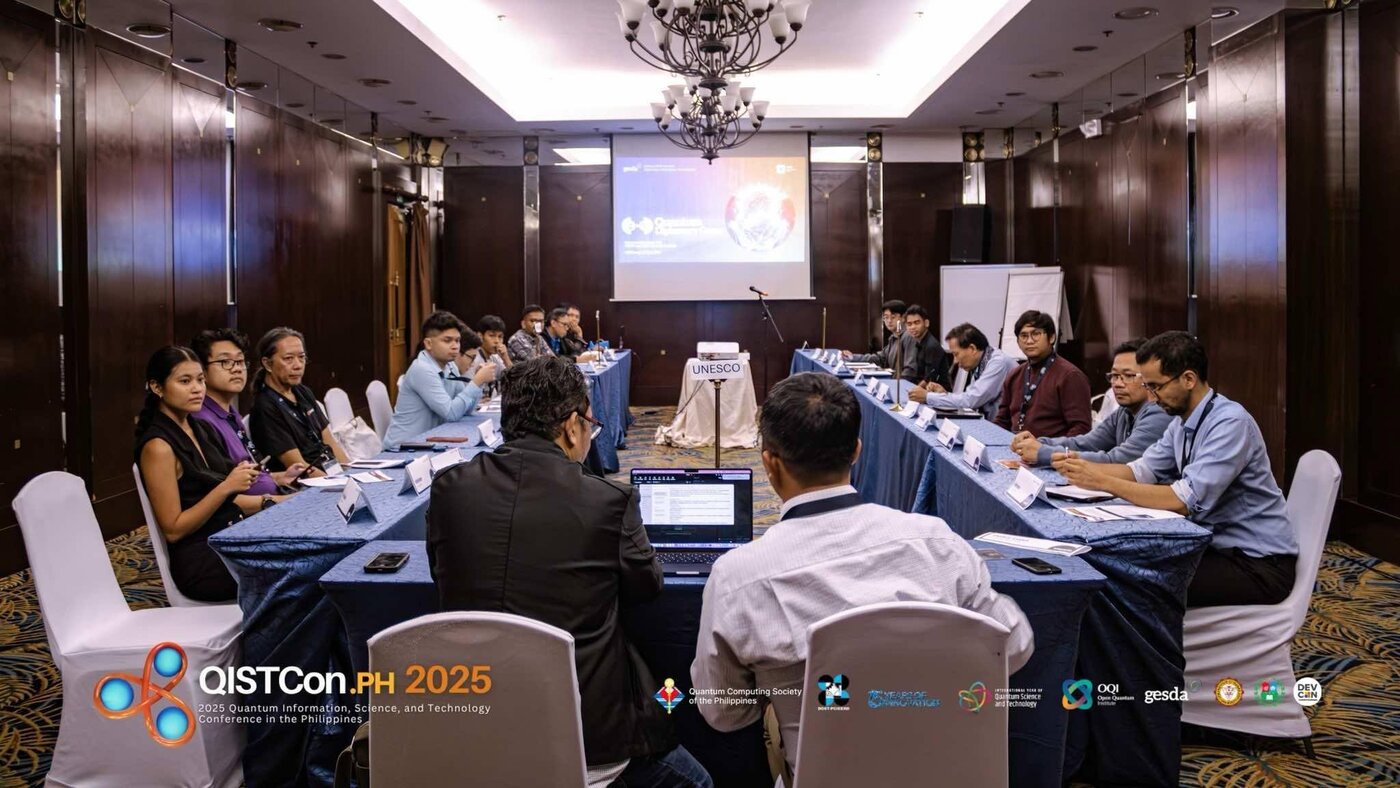
The afternoon was devoted to three parallel working groups:
 |
|---|
| A working group session during the conference. |
- Quantum Roadmapping for the Philippines, facilitated by Brenette L. Abrenica, observed that the existing national roadmap focuses mainly on research and development. Participants called for broader industry and government involvement, clearer leadership, and a shared national vision, with post-quantum cryptography, optimization, and quantum-assisted AI identified as potential priority areas. For the next three years, the group proposed assessing quantum initiatives across stakeholders, conducting a national visioning exercise, and developing an ecosystem action plan.
- Building a Sustainable Quantum Education Framework, chaired by Dr. Cherry Sta. Romana and Dr. Rhowell Dellosa, with Engr. Dylan Josh Lopez as facilitator, brought together 43 on-site and four virtual participants, including members of CHED Technical Committees. Proposals included strengthening physics and mathematics prerequisites, enriching existing courses with quantum content, a collaboratively developed massive open online course (MOOC), an assessment of universities’ teaching and research capacity, and scholarships to build faculty expertise.
- Strengthening the Indo-Pacific Quantum Ecosystem explored Southeast Asian cooperation grounded in ethical governance, equitable access, and science diplomacy. The Philippines proposed five pillars of regional cooperation: inclusion, trust, access, resource sharing, and policy coherence. Proposed actions included a QISTCon white paper on quantum inclusion, a regional framework on quantum access and ethics, and an ASEAN Quantum Computing Conference in the Philippines in 2026. These are proposals for further coordination, not confirmed commitments.
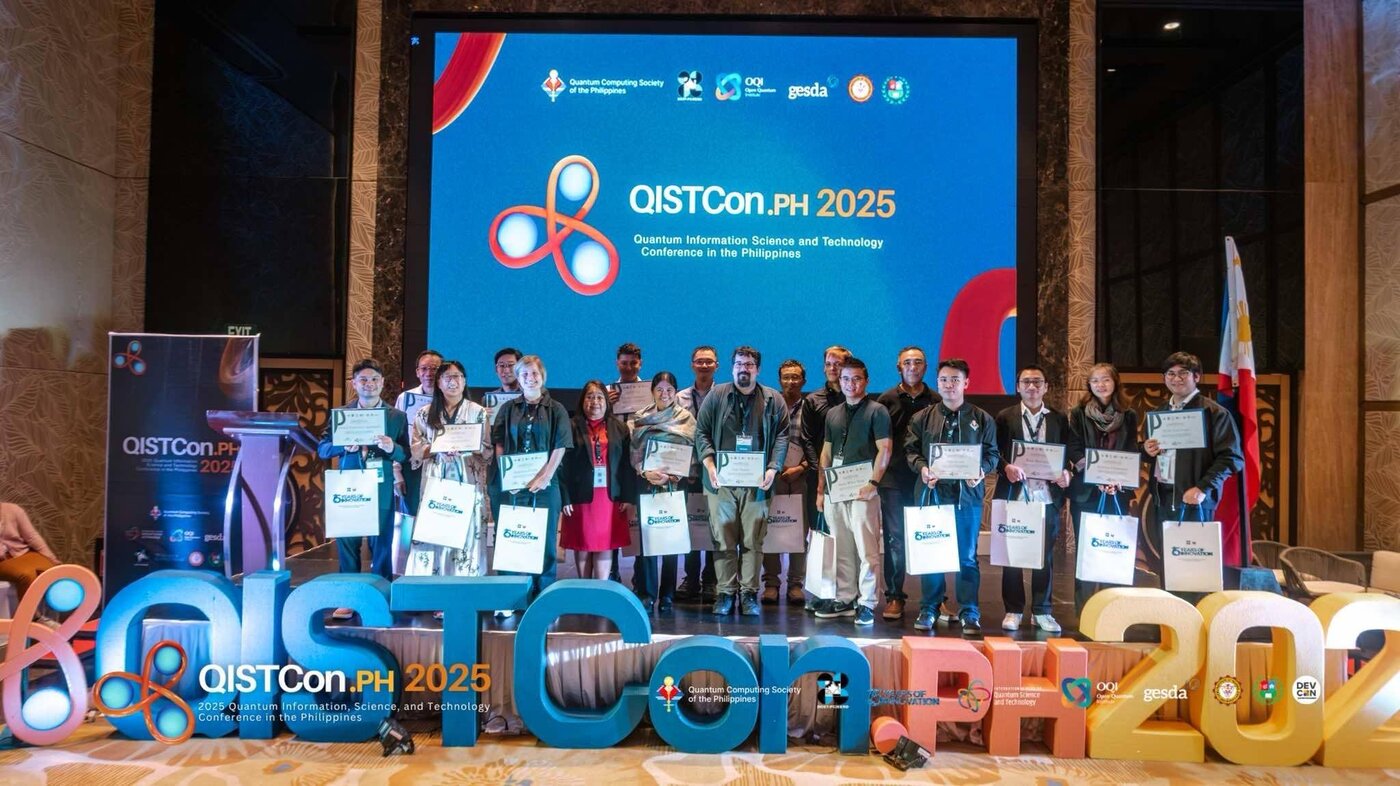
The conference closed with an event evaluation, the awarding of certificates, and closing remarks from Niñaliza H. Escorial.
 |
|---|
| Participants with their certificates at the closing of QISTCon.PH 2025. |
Acknowledgements
QISTCon.PH 2025 was led by QCSP President Bobby O. Corpus Jr. as lead organizer, with committee chairs Cherry Sta. Romana (Academic, Education), Dylan Lopez (Academic, Research), Jayson Victoriano (Academic, Poster), Noelyn De Jesus (Responsible Quantum Technologies), Jabez Ayson (Operations and Sponsorship), and Stefany Caparida (Partnerships and External Relations), and Roland Otadoy and Brenette Abrenica as lead facilitators for the Quantum Technology Roadmap working group.
QCSP thanks its fellow organizers and the funding provided through the International Year of Quantum Science and Technology, as well as Edna Nacianceno, Meraida Reyes, Ariane Jaraplasan, Allane Orendez, and the rest of the DOST-PCIEERD team, whose support was instrumental to the conference. QCSP also thanks the organizing team, facilitators, volunteers, speakers, panelists, research presenters, sponsors, exhibitors, and all participants from the Philippines and abroad.
 |
|---|
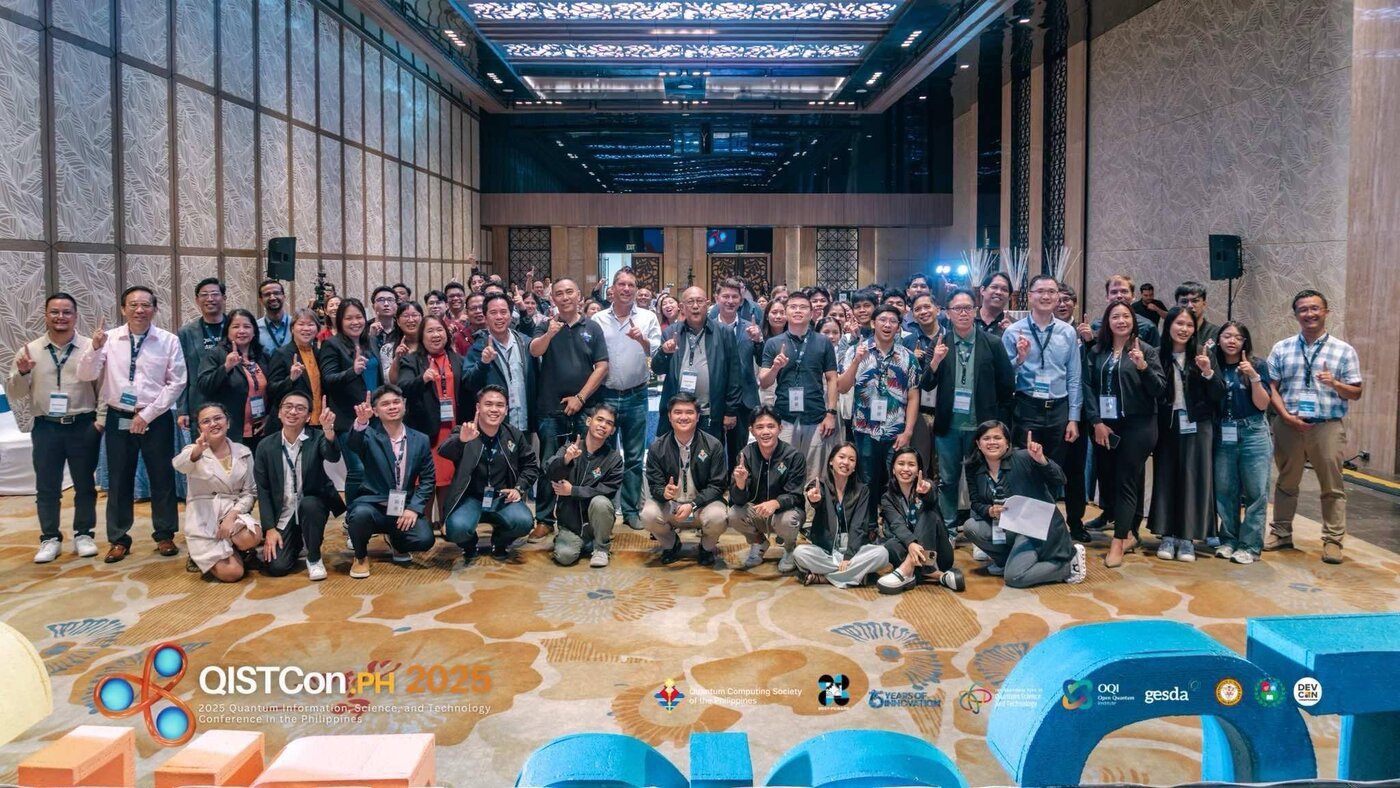
| Participants and organizers gather for a group photo at QISTCon.PH 2025. |
The exchanges and relationships formed at QISTCon.PH 2025 provide a foundation for continued efforts to build an inclusive and sustainable quantum ecosystem in the Philippines and the wider region.
 NVIDIA Launches First-ever Quantum Day at GTC 2025: Paving the Way for the Future of Quantum Computing