 QCSP
QCSP 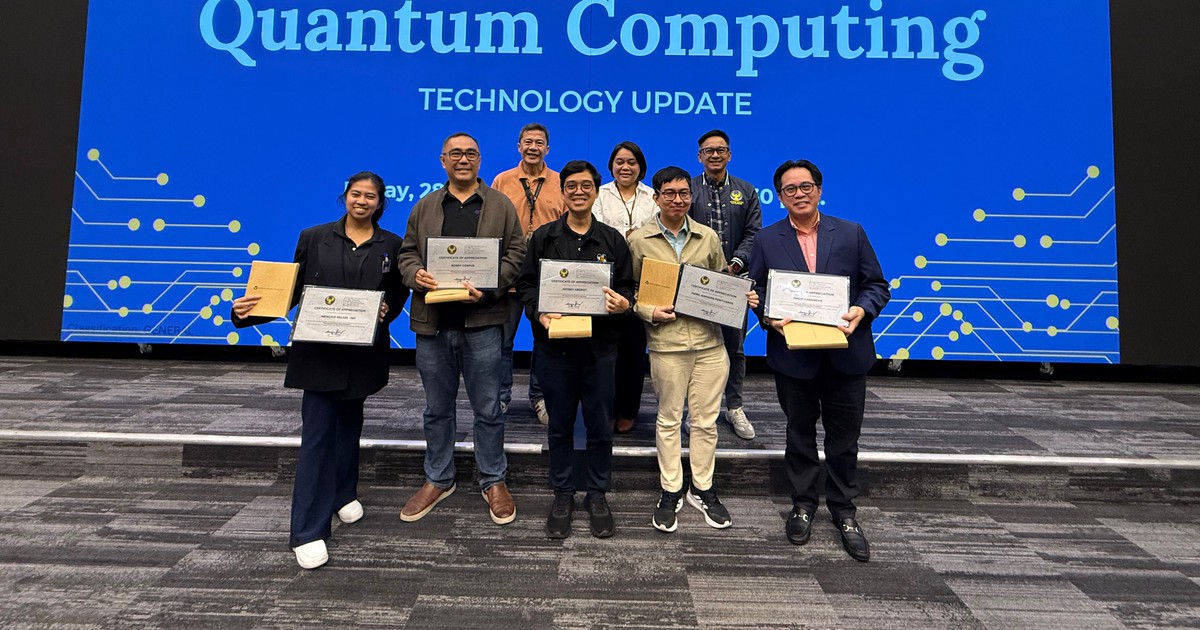
MANILA, Philippines — The Quantum Computing Society of the Philippines (QCSP) conducted a one-day quantum computing and quantum readiness workshop for the Bangko Sentral ng Pilipinas (BSP) on August 28, 2026, at the Hub Auditorium of the BSP Head Office in Manila.
 |
|---|
| Speakers and organizers after the Quantum Computing Technology Update workshop, BSP Head Office, August 28, 2026. |
The workshop was designed as an enablement program for BSP personnel, providing participants with a foundation for understanding quantum computing and helping the institution begin building internal awareness and capability around the opportunities and risks associated with emerging quantum technologies.
The program covered the fundamentals of quantum computing, computational complexity, quantum circuits and algorithms, hands-on quantum programming, and quantum readiness. It also connected these concepts to issues particularly relevant to a central bank, including financial applications, cybersecurity, post-quantum cryptography, and the longer-term implications of quantum technologies for the financial sector.
The Workshop Almost Did Not Happen
Heavy rains had persisted throughout the week, raising concerns that the event might be cancelled. Despite the difficult weather conditions, the workshop pushed through, with many participants still making their way to the BSP Head Office to attend the program.
Cherry Pie Valencia served as master of ceremonies, while Raquel T. Apostol, Director of the IT Strategy and Governance Department of the Bangko Sentral ng Pilipinas, formally opened the workshop.
The morning sessions focused on making quantum computing accessible to participants coming from different professional backgrounds.
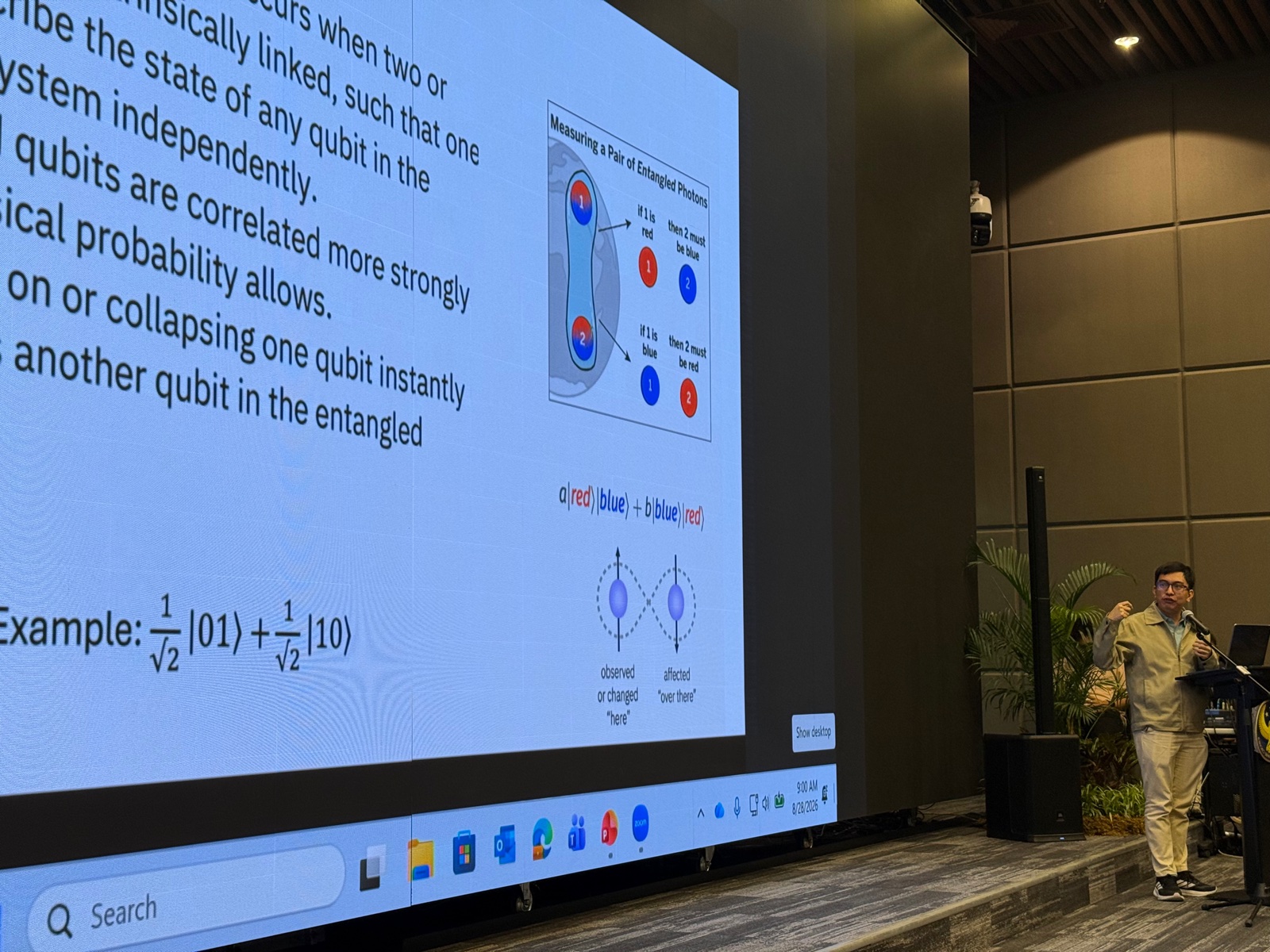
Marc Jermaine Pontiveros, Senior Software Engineer at White Widget, Qiskit Advocate, and MS Computer Science candidate at the University of the Philippines Diliman, introduced the fundamental ideas behind quantum computing, including superposition, entanglement, interference, and measurement. He later discussed quantum circuits and algorithms, connecting these concepts to how quantum computers process information.
 |
|---|
| Marc Jermaine Pontiveros discusses entanglement during the morning session on quantum computing fundamentals. |
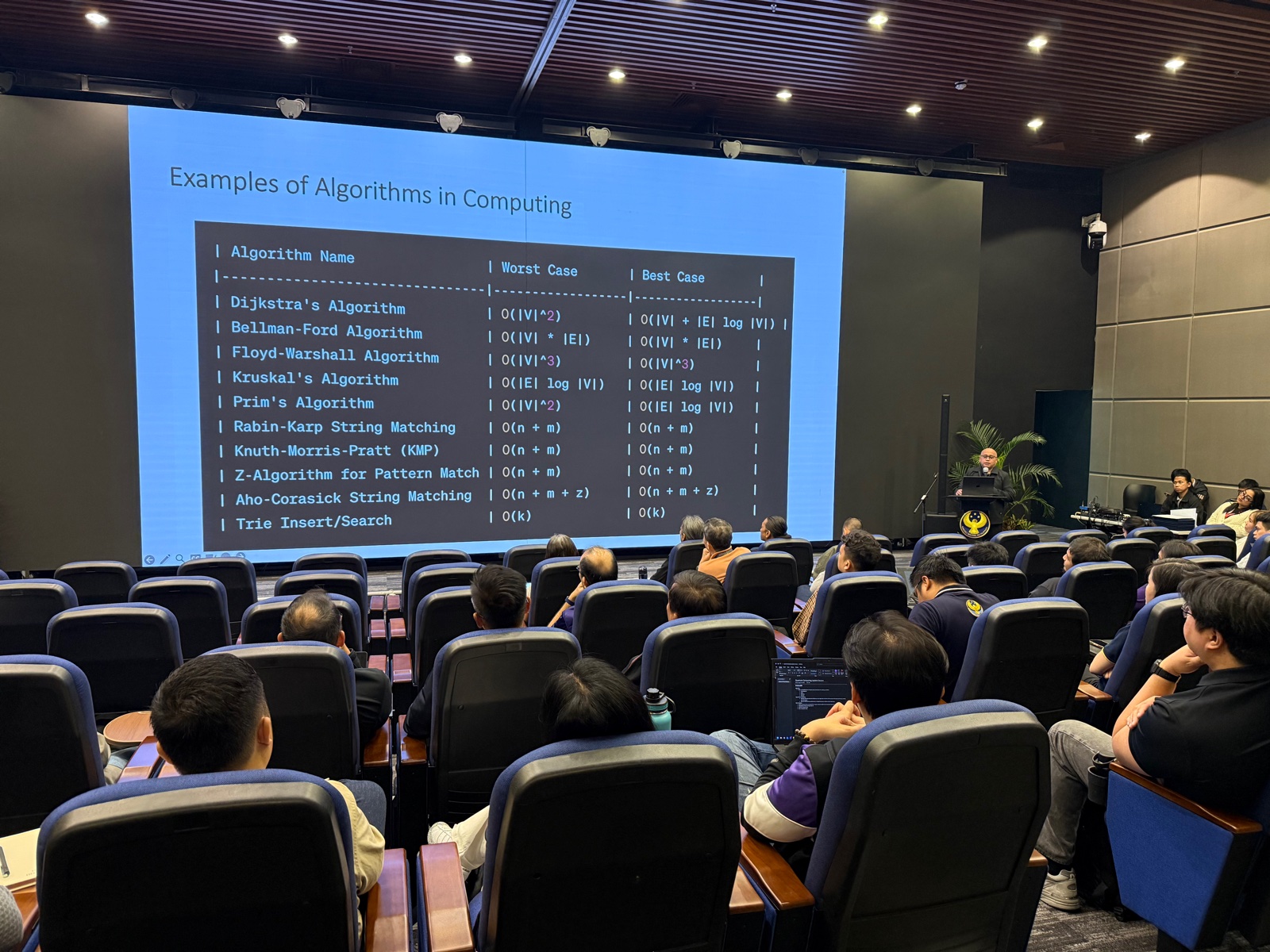
Elmer Peramo, Assistant Scientist at the Department of Science and Technology and QCSP Director for Program Development, introduced computational complexity and explained why certain difficult computational problems are of particular interest in quantum computing.
 |
|---|
| Elmer Peramo’s session on computational complexity compared how classical algorithms scale. |
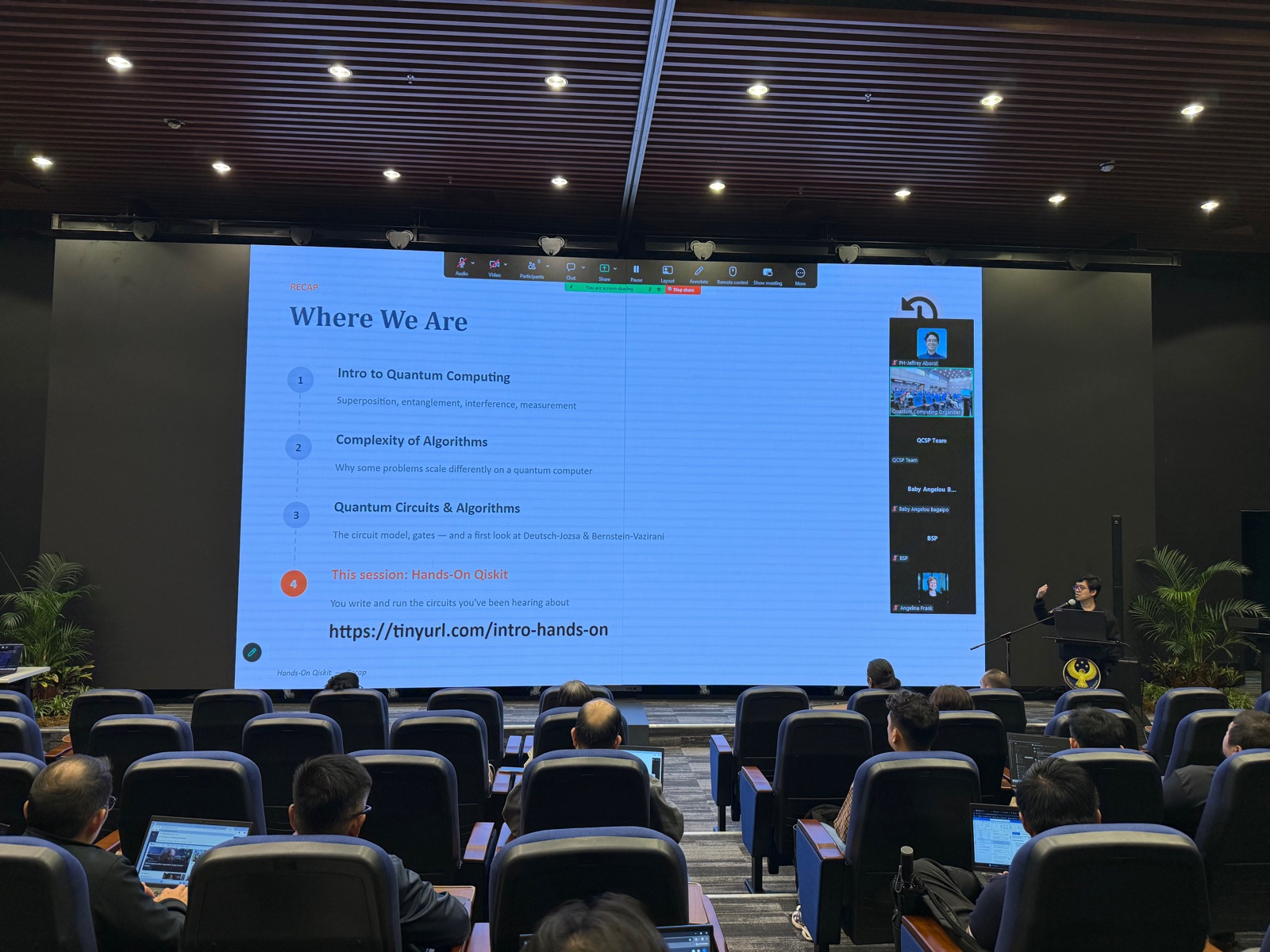
The workshop then moved from concepts to hands-on quantum computing with Jeffrey Aborot, Supervising Science Research Specialist at DOST–Advanced Science and Technology Institute (DOST-ASTI), who introduced participants to quantum programming using Qiskit. His session demonstrated how quantum circuits can be constructed and explored through software, giving participants an opportunity to see how the concepts introduced earlier in the day translate into actual quantum programs.
 |
|---|
| Jeffrey Aborot leads the hands-on Qiskit programming session. |
The discussions later turned toward one of the most immediate concerns for the financial sector: cybersecurity in a future where sufficiently powerful quantum computers could challenge some of today’s widely deployed public-key cryptographic systems.
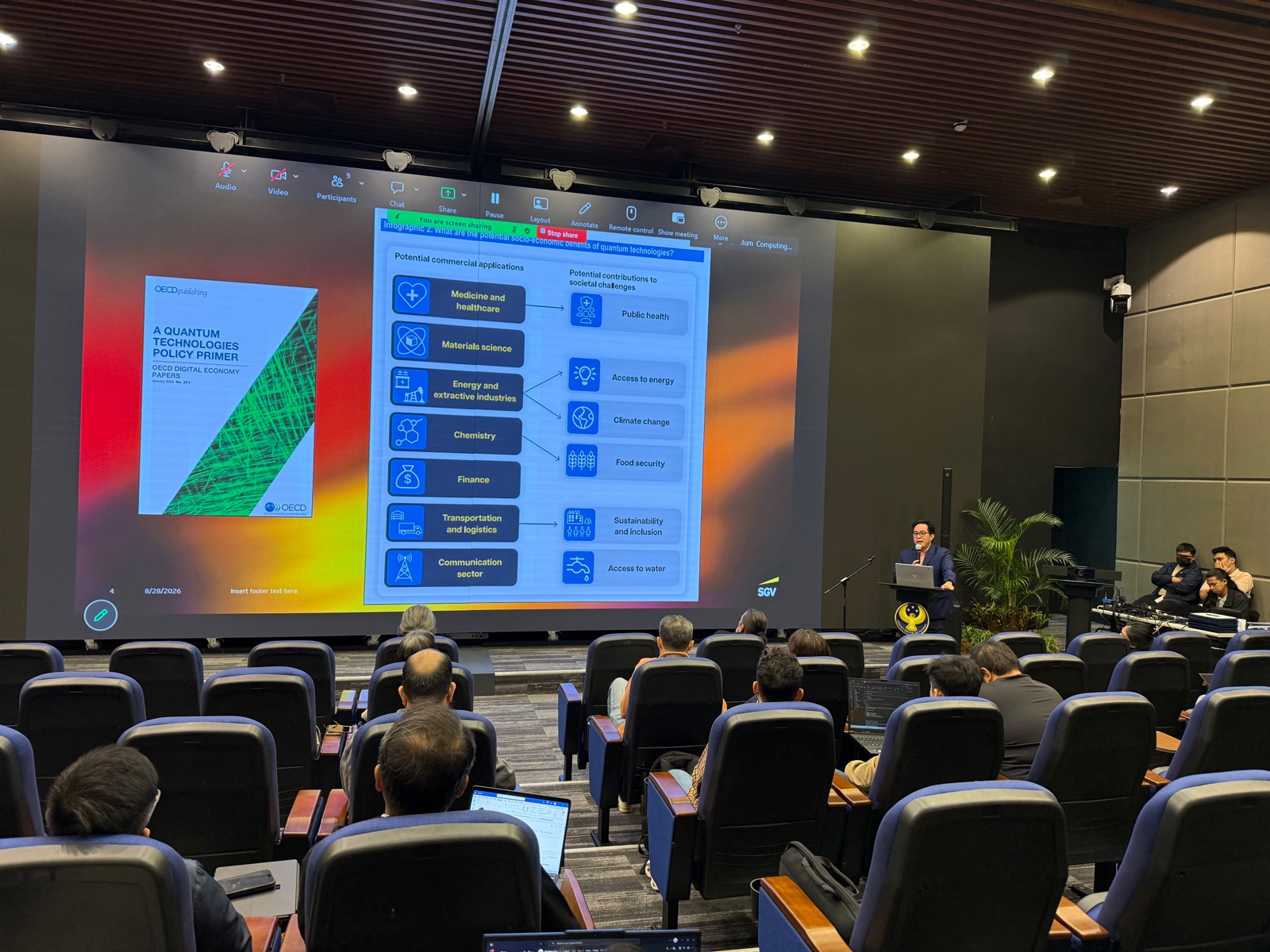
Philip Casanova, Partner at SGV & Co./EY Philippines and President of ISC2 Philippines, discussed quantum readiness, realistic timelines, cybersecurity risks, and the transition toward quantum-safe cryptography. The session highlighted why organizations do not need to wait for fault-tolerant quantum computers before beginning preparations for the post-quantum era.
 |
|---|
| Philip Casanova’s session covered quantum readiness timelines and the transition to quantum-safe cryptography. |
The Weather Changes the Program
As the rain continued, government work was suspended by 1 p.m., forcing organizers to shorten the remainder of the workshop.
The scheduled presentations of Dylan Josh Domingo Lopez, Dr. Angelina Frank, and Olga Mamlyga could no longer proceed in their original format. Their sessions were intended to examine the financial sector’s needs and readiness for quantum technologies, potential quantum-computing applications in finance, and architectural approaches to post-quantum resilience across finance, blockchain, and digital assets.
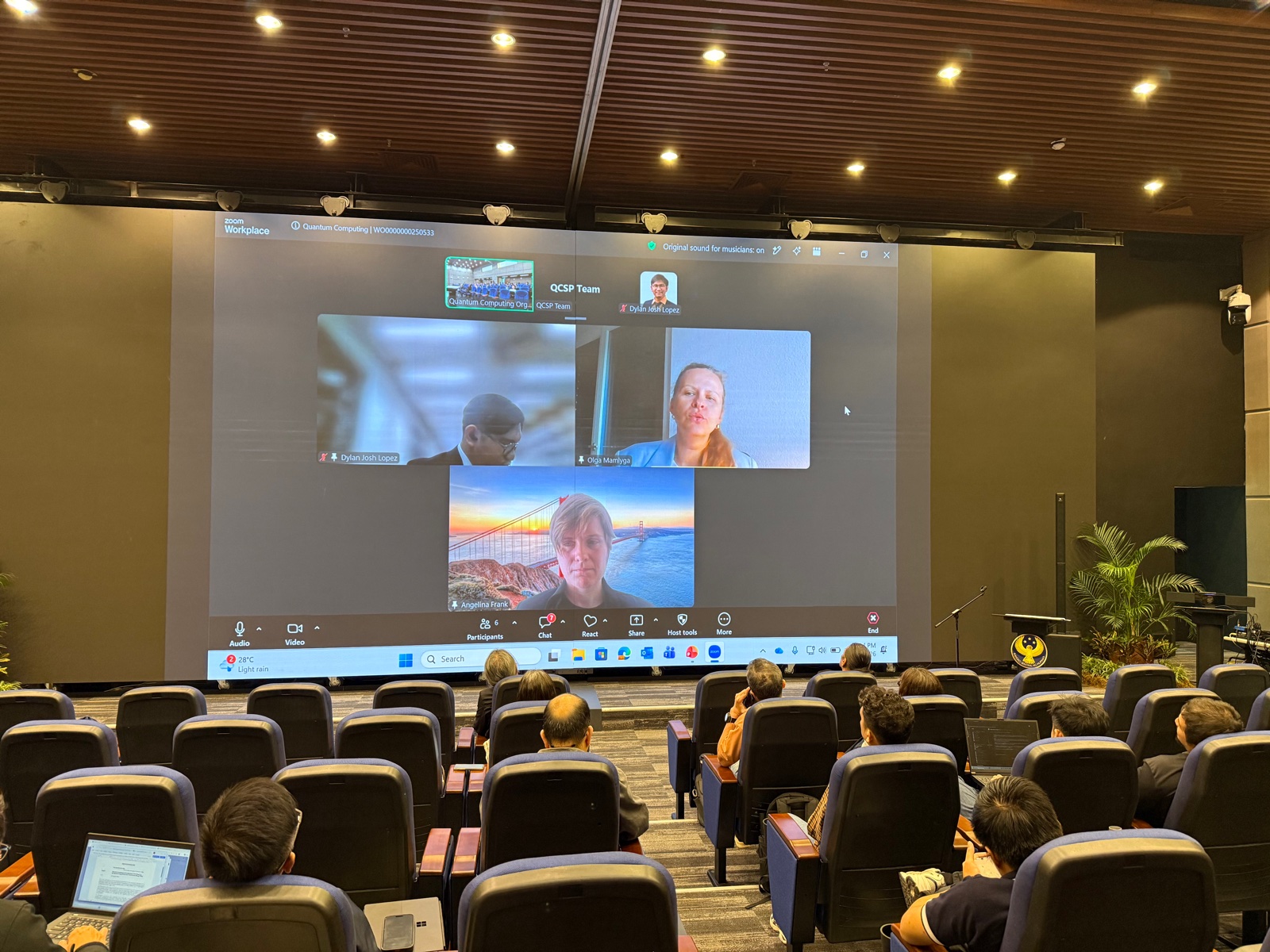
Instead of simply cancelling the remaining discussions, the organizers brought the speakers together for a panel discussion, allowing the audience to engage directly with them on the implications of quantum computing and post-quantum security for the financial sector.
 |
|---|
| Dylan Josh Lopez, Olga Mamlyga, and Dr. Angelina Frank join the improvised panel discussion remotely. |
The shortened format ultimately provided an opportunity for a broader conversation among experts and participants, connecting the technical concepts discussed throughout the workshop with the practical questions facing financial institutions today.
Building Quantum Readiness in the Financial Sector
Despite the shortened program, the workshop successfully introduced participants to a broad spectrum of quantum computing—from the fundamental principles of qubits and quantum circuits to programming, algorithms, cybersecurity, financial applications, and post-quantum resilience.
More importantly, the event represented another step toward building quantum readiness in the Philippines.
For the financial sector, quantum readiness is not simply about preparing to use quantum computers. It also means understanding how quantum technologies may affect existing digital infrastructure, identifying cryptographic systems that may eventually need to be migrated, developing expertise in post-quantum cryptography, and building institutional knowledge before the technology reaches greater maturity.
For QCSP, bringing these discussions to the country’s central bank is part of a broader effort to develop a Philippine quantum ecosystem that connects government, academia, industry, and the technology community.
The August 28 workshop demonstrated that interest in quantum technology is moving beyond universities and research laboratories and into institutions that will eventually have to address its economic, cybersecurity, regulatory, and operational implications.
And despite a week of heavy rain, an early suspension of government work, and a program that had to be reorganized on the spot, the workshop pushed through.
The circumstances may have shortened the day, but they did not diminish its purpose: to begin preparing Philippine institutions for a technological transition that is still emerging, but whose implications are important enough to understand today.
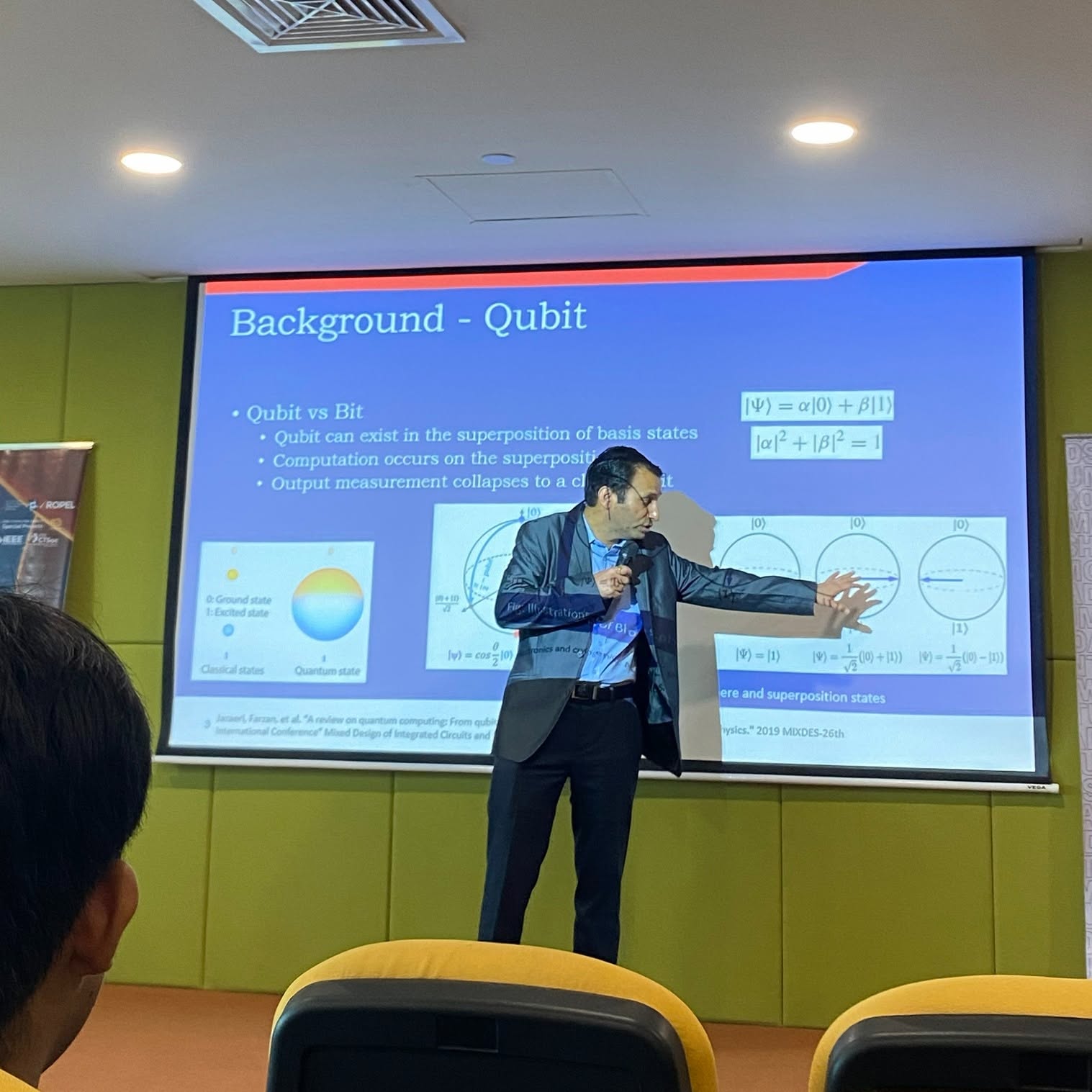 🚀 Quantum Roadshow 2026: Building the Philippines' Quantum Future, One Campus at a Time