 QCSP
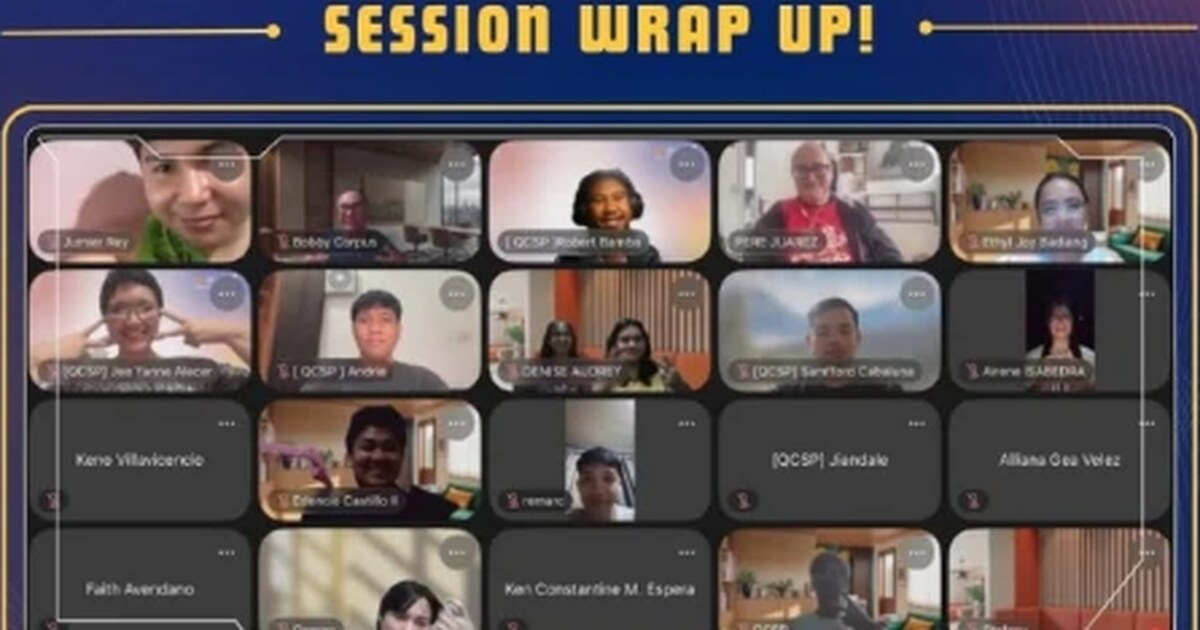
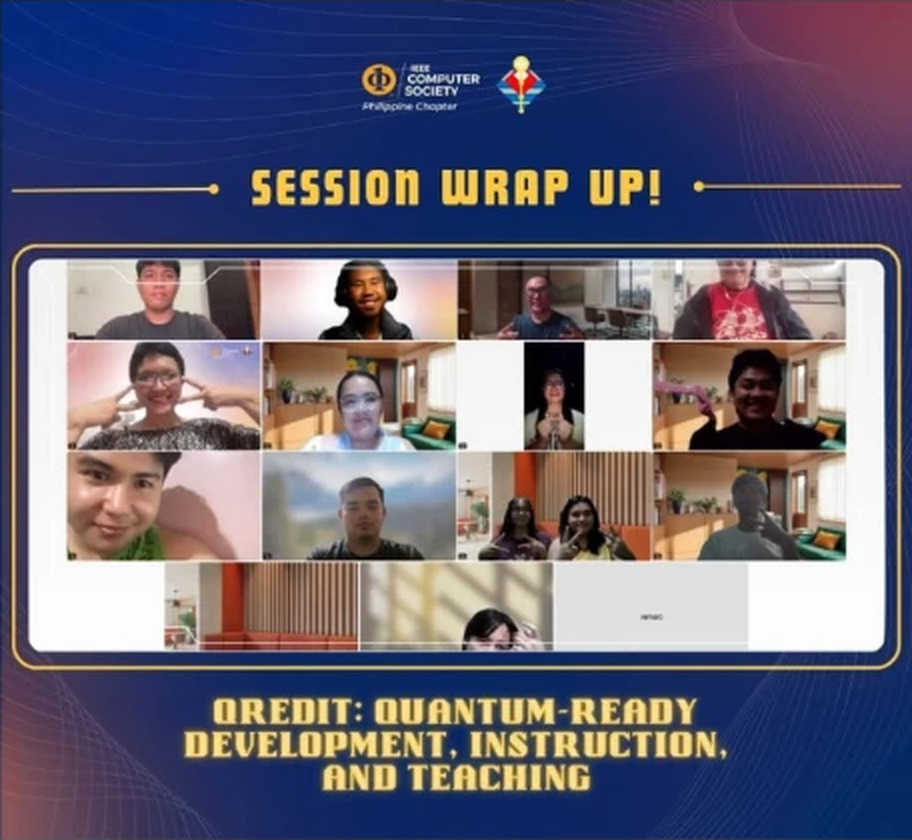
The Alice in Quantumland Training Workshop was held on November 21, 2026 via Webex as part of the Q-ReDIT (Quantum Ready Development, Instruction, and Training) series, co-organized by the Quantum Computing Society of the Philippines (QCSP) and the IEEE Computer Society Philippine Chapter.
The Speaker and the Approach
The session was led by Dr. Pere Juarez Vives of the University of Barcelona. He presented an educational methodology co-developed with Dr. Maria Luisa Chiofalo of the University of Pisa under the Qubricks toolbox, which is aligned with the UNESCO quantum agenda.
The approach is built on constructivism and active learning. It uses gamification, LEGO-based concepts, and metaphors in place of passive lectures, with the aim of making quantum literacy available to both STEM students and the broader public.
 |
|---|
| Participants and the speaker at the close of the Alice in Quantumland Training Workshop. |
Watch the Webinar
The recording of the webinar on YouTube.
Part 1: Quantum Reversibility (A Board Game Activity)
Participants played a modified digital version of Snakes and Ladders on Miro, using online dice to track Alice’s 10-roll journey across squares with ladders, snakes, clocks (wait two turns), and a reset square (return to square 1).
They then simulated erasing one move from their logs. This brought out the difference between two ideas:
- Reconstruction: discovering what happened in the past.
- Reversibility: applying an inverse operation to undo an effect. Applying a quantum $X$ gate twice restores the original state, while a reset operation cannot be undone.
The activity also touched on uncomputation and environmental decoherence. The session ended with a live Slido quiz that reinforced these concepts.
Part 2: Quantum Citizenship (“The Lost Memory of Quantumland”)
The second part was an asynchronous, collaborative exercise on Miro built around three “mysterious doors”: the White Rabbit, the Queen of Hearts, and the Mad Hatter. Participants posted reflections on three questions:
- Who should have access to quantum knowledge?
- Who governs quantum technologies?
- How will quantum shape the future?
The exercise draws on philosopher José Antonio Marina’s idea of shared intelligence as a common good. It calls on society to move from passive observers to active, critically engaged participants.
Q&A Highlights
- Low-resource adaptation: Prof. Vives confirmed that the Qubricks toolkit is open source (Creative Commons). It can be run offline in public schools with printed game boards, physical dice, and paper.
- Entry points and regulation: For beginners without a physics background, he recommended sparking curiosity and surprise. He also stressed collaborating early with regulators and legacy institutions to build trust around post-quantum cryptography (PQC) and other emerging technologies.
What’s Next
QCSP President Bobby Corpus Jr. formally invited Prof. Vives to conduct an in-person workshop next year in partnership with UP NISMED (National Institute for Science and Mathematics Education Development), to help develop a high school quantum curriculum. See the earlier announcement on QCSP and UP NISMED for background.
Two more webinars in the Q-ReDIT series were announced:
- Developing Expertise in Quantum Computing with Himanshu Thapliyal (November 28)
- Quantum Technology for Educators with Olga Mamlyga (November 30)
QCSP thanks Prof. Vives, the IEEE Computer Society Philippine Chapter, and all participants. Follow the events page for updates.
 NEUST RIEx 2026 Holds Quantum and Cybersecurity Capture-the-Flag Hackathon