 Bobby Corpus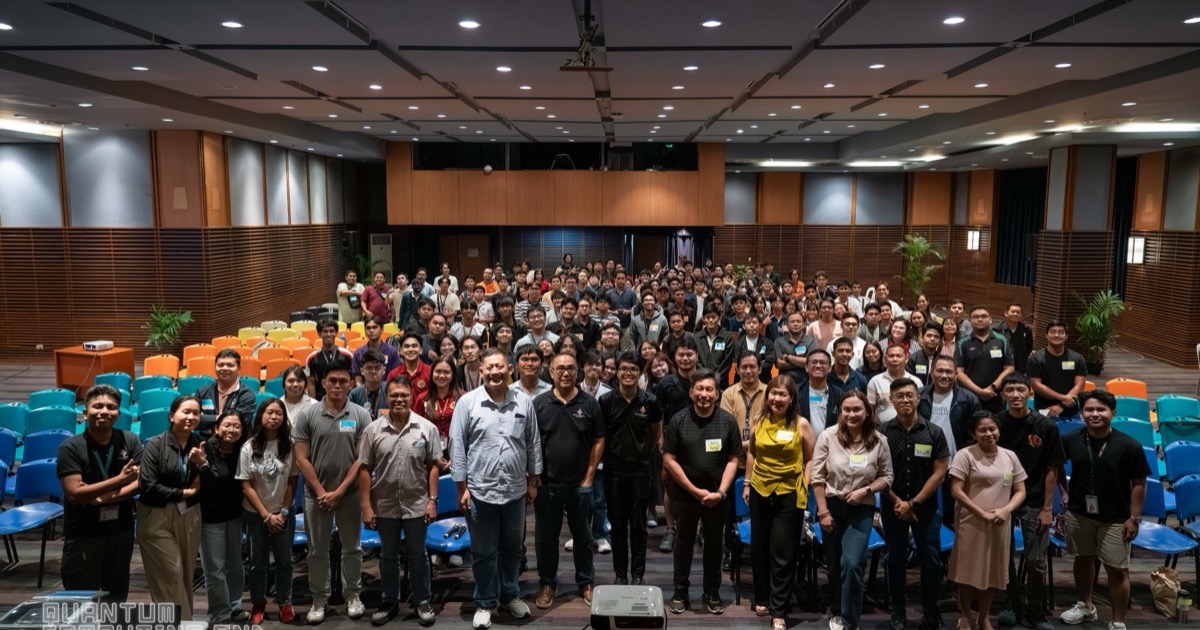
DAVAO CITY, Philippines, June 27, 2026 — Ateneo de Davao University (AdDU) hosted the Quantum Computing and Cybersecurity Hackathon 2026, bringing together students, educators, government representatives, industry experts, and technology enthusiasts to explore the rapidly evolving fields of quantum computing and cybersecurity.
The event formed part of the nationwide Quantum Computing and Cybersecurity Lecture Series and Hackathon, a collaborative initiative of the Quantum Computing Society of the Philippines (QCSP) and the ISC2 Philippines Chapter, aimed at preparing the next generation of professionals for the challenges and opportunities presented by emerging technologies.
 |
|---|
| Participants, speakers, and organizers of the Quantum Computing and Cybersecurity Hackathon 2026 at Ateneo de Davao University. |
The program opened with welcome remarks from Fr. Karel S. San Juan, SJ, President of Ateneo de Davao University, followed by Philip Cassanova, President of the ISC2 Philippines Chapter, and Mr. Bobby O. Corpus Jr., President of QCSP. The speakers emphasized the importance of strengthening cybersecurity capabilities and building awareness of quantum technologies as they become increasingly relevant to industry, government, and academia.
The technical program began with Mr. Bobby O. Corpus Jr., President of QCSP, who delivered an introductory lecture on quantum computing. Participants were introduced to the foundational concepts of quantum information science, including qubits, superposition, entanglement, and the potential applications of quantum technologies across various sectors. The session provided attendees with a broad overview of the field and highlighted how quantum computing is expected to impact science, industry, cybersecurity, and national development in the coming decades.
A message of support was subsequently delivered by Aris Austria, Assistant Regional Director of DICT Region XI, highlighting the importance of developing local expertise in emerging technologies and strengthening the region’s capacity for digital innovation.
Following a networking break, participants attended a presentation by Jason Thomas, Director of Product Development at Quantum eMotion, titled “Building Quantum-Resilient Systems: Practical Steps Toward a Quantum-Safe Future.” The session explored practical approaches organizations can adopt today to prepare for future quantum threats, including strategies for transitioning toward quantum-safe security architectures.
The morning technical program concluded with a presentation by Phaneendra P. V. K., CEO of Garudyn Tech, India, on Quantum Security in Operational Technology. His talk examined the unique cybersecurity challenges facing industrial and operational technology environments and discussed how quantum-era security considerations are beginning to influence critical infrastructure protection strategies.
Following the public lecture sessions, representatives from DOST Region XI and CHED Region XI delivered messages of support, underscoring the importance of collaboration among academia, government, and industry in developing future-ready talent and strengthening the country’s technological capabilities.
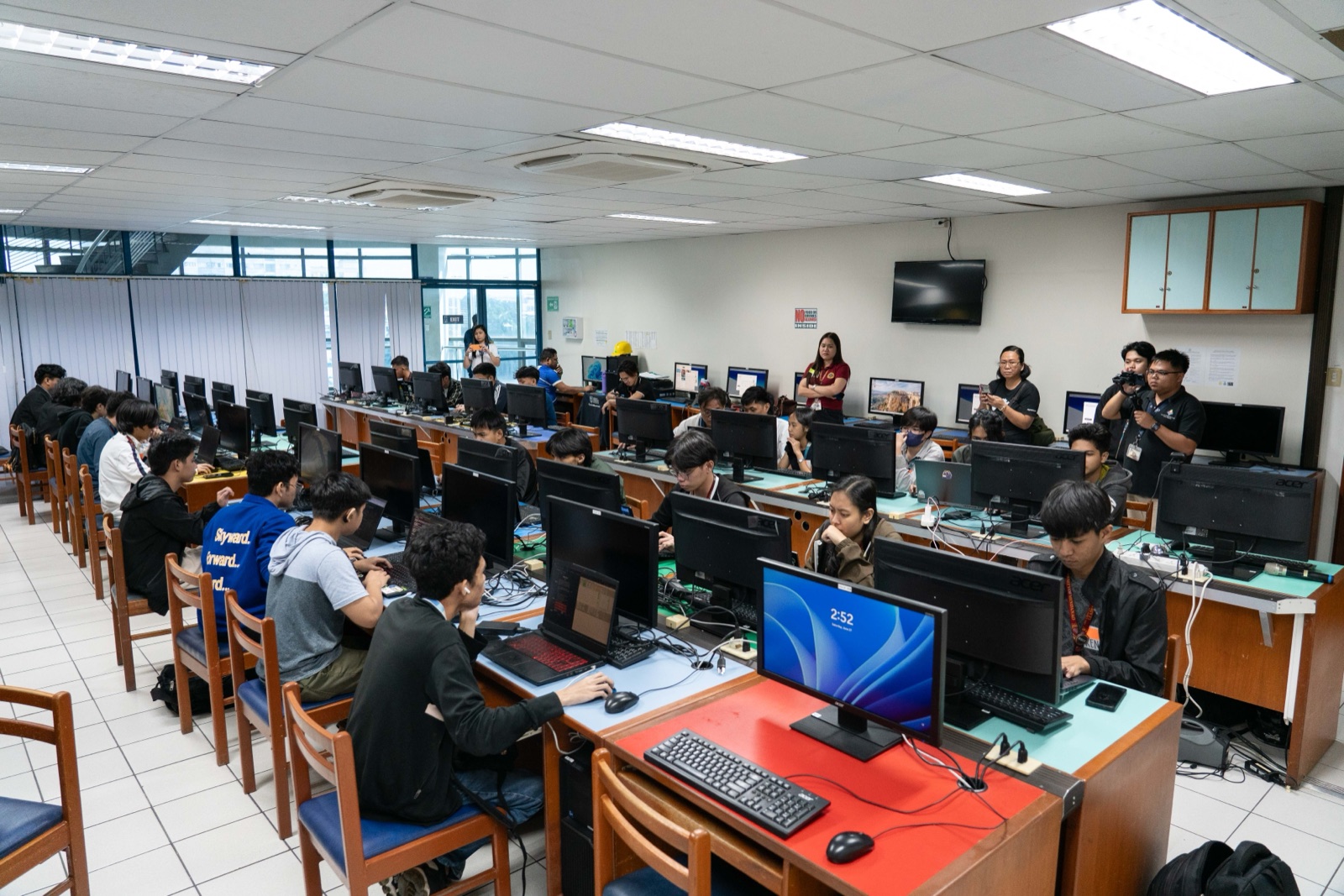
In the afternoon, participants transitioned to the competition phase of the event. Teams took part in the Quantum Computing and Cybersecurity Capture-the-Flag (CTF) Hackathon, where they were challenged to apply cybersecurity concepts, analytical thinking, and problem-solving skills to a series of technical challenges inspired by real-world scenarios.
 |
|---|
| Teams work through challenges during the Quantum Computing and Cybersecurity Capture-the-Flag (CTF) Hackathon. |
The hackathon provided participants with an opportunity to reinforce the concepts discussed during the morning sessions while developing teamwork and practical cybersecurity skills. Throughout the competition, teams worked collaboratively to solve challenges involving cybersecurity, cryptography, and emerging technologies.
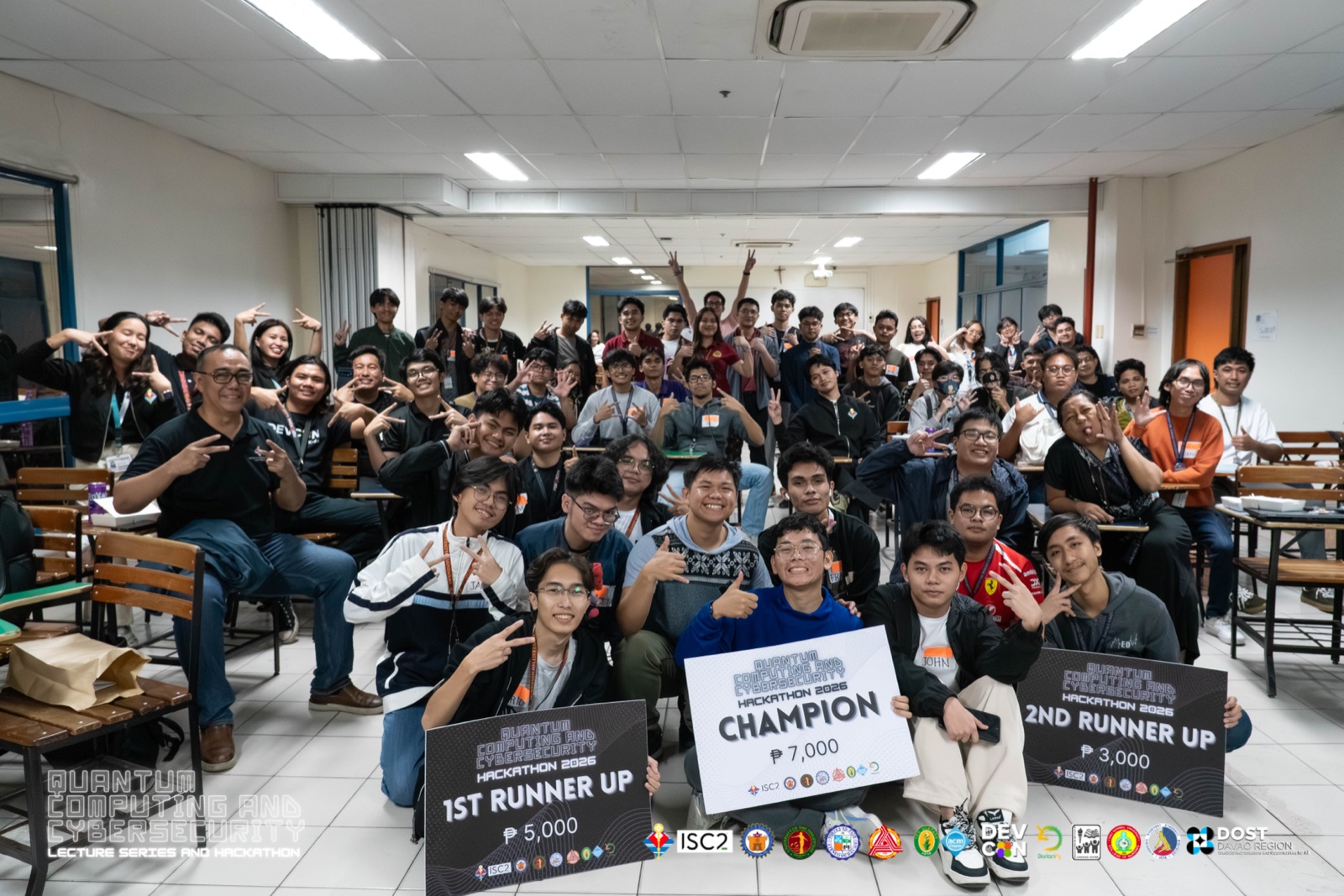
After several hours of competition, the event concluded with an awarding ceremony recognizing the achievements of the top-performing teams and participants.
 |
|---|
| Winning teams and organizers at the awarding ceremony of the Quantum Computing and Cybersecurity Hackathon 2026. |
Closing remarks were delivered by Dr. Oneil Victoriano, Assistant Dean for the Computer Studies Cluster of Ateneo de Davao University, who commended the participants for their enthusiasm, curiosity, and commitment to learning. He encouraged them to continue exploring emerging technologies and to apply their knowledge in ways that contribute positively to their communities and professions.
The Quantum Computing and Cybersecurity Hackathon 2026 at Ateneo de Davao University demonstrated the growing interest in quantum technologies and cybersecurity in Mindanao and highlighted the importance of preparing students and professionals for the technological transformations ahead. Through the collaborative efforts of Ateneo de Davao University, QCSP, ISC2 Philippines Chapter, DICT Region XI, DOST Region XI, CHED Region XI, and industry partners, the event provided participants with valuable exposure to emerging technologies while helping cultivate the next generation of quantum-ready and cybersecurity-aware professionals in the Philippines.
 QCSP Introduces Quantum Programming to Philippine Science High School Interns Using SpinQ Gemini